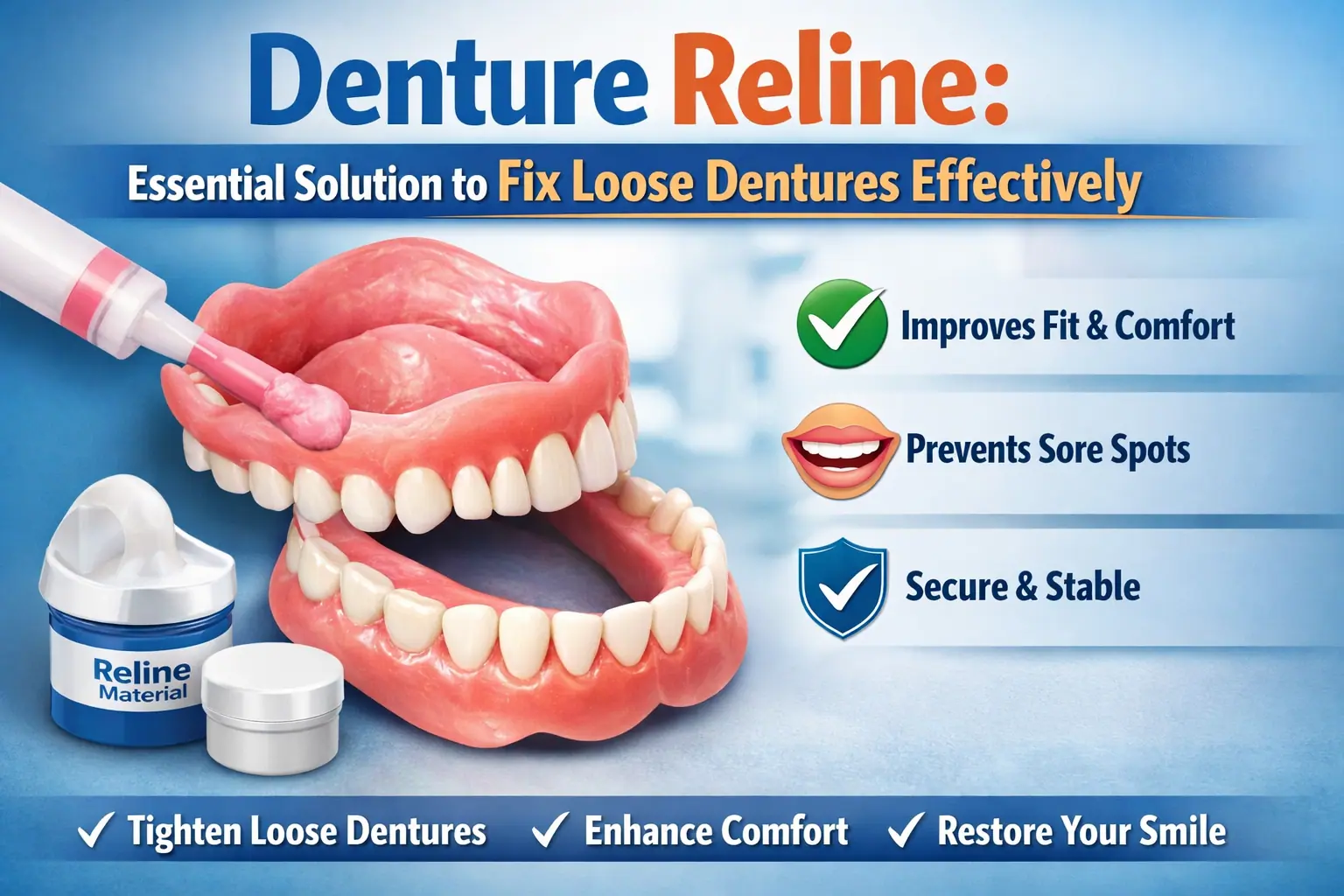
A denture reline is a dental procedure that reshapes the inner surface of a denture so it fits properly against the gums. Over time, natural changes in gum tissue and jawbone structure cause dentures to loosen. This adjustment restores stability, improves comfort, and enhances chewing efficiency without replacing the entire denture.
It is commonly recommended when dentures no longer fit securely due to bone resorption or tissue changes. According to the American Dental Association, ongoing oral changes are expected after tooth loss, making periodic adjustments essential for maintaining oral function and comfort.
Definition and Clinical Meaning
In clinical terms, this procedure involves adding new material—usually acrylic or a soft liner—to the tissue side of an existing denture. This allows the denture to conform accurately to the current shape of the patient’s gums.
This process does not alter the visible portion of the denture. Instead, it focuses entirely on the internal surface that contacts oral tissues. The goal is to improve retention, stability, and overall functionality.
From a prosthodontic perspective, it is considered a conservative and cost-effective solution compared to full denture replacement. It preserves the existing denture structure while adapting it to anatomical changes.
Why Dentures Become Loose Over Time
Dentures are designed to fit snugly over the gums at the time they are created. However, the human mouth is not static. Several biological processes gradually change the shape of the oral cavity.
The primary reason dentures loosen is the continuous remodeling of bone and soft tissue. According to the American Dental Association, after tooth extraction, the jawbone begins to shrink due to lack of stimulation. This process is known as bone resorption.
As the bone shrinks, the gum tissue sitting on top of it also changes shape. This creates gaps between the denture and the gum surface, leading to instability. Over time, even well-made dentures will lose their precise fit.
Role of Gum Shrinkage and Bone Loss
Bone loss in the jaw, also called alveolar bone resorption, is a natural consequence of tooth loss. Without tooth roots to stimulate the bone, the body gradually reabsorbs it.
The Mayo Clinic notes that this process can significantly alter facial structure and oral function. As the jawbone shrinks, dentures lose their foundation, leading to looseness and discomfort.
Gum shrinkage further complicates this issue. Soft tissues adapt to the changing bone underneath, resulting in uneven surfaces. This makes it difficult for dentures to maintain suction and stability.
It compensates for these changes by filling the gaps and restoring proper contact between the denture and the gums.
Types of Denture Reline
Understanding the different types this procedures is essential for selecting the right option based on oral condition, comfort level, and long-term needs.
Hard Denture Reline
A hard denture reline uses durable acrylic material to reshape the inner surface of the denture. This type of it is considered a long-term solution.
Hard relines are typically performed in a dental laboratory. The dentist takes an impression of the patient’s gums, which is then used to create a new, rigid base inside the denture.
This method provides a precise fit and can last for several years if properly maintained. It is best suited for patients with relatively stable gum and bone structures.
Key Characteristics:
- Strong and durable material
- Long lifespan
- Accurate fit
- Requires temporary removal of denture
Soft Denture Reline
A soft denture reline involves placing a flexible, cushion-like material inside the denture. This type of this ideal for patients with sensitive gums or sore spots.
The soft liner acts as a shock absorber, reducing pressure on the underlying tissues. It is often recommended for individuals experiencing discomfort with hard dentures.
However, soft relines are less durable and require more frequent replacement. They typically last several months before needing adjustment.
Key Characteristics:
- Comfortable and flexible
- Ideal for sensitive gums
- Shorter lifespan
- Requires regular maintenance
Temporary Denture Reline
A temporary denture reline is used as a short-term solution during healing phases, especially after tooth extraction or oral surgery.
This type of denture reline uses medicated or tissue-conditioning materials that help the gums recover while maintaining denture usability.
Temporary relines are not designed for long-term use. They are typically replaced with a hard or soft reline once the gums have stabilized.
Key Characteristics:
- Short-term use
- Supports healing tissues
- Less durable
- Requires follow-up adjustments
Comparison of Denture Reline Types
| Feature | Hard Denture Reline | Soft Denture Reline | Temporary Denture Reline |
|---|---|---|---|
| Durability | High | Medium | Low |
| Comfort Level | Moderate | High | Moderate |
| Lifespan | Several years | Several months | Few weeks |
| Best Use Case | Stable gums | Sensitive tissues | Healing phase |
| Maintenance | Low | Moderate | High |
Signs You Need a Denture Reline
Recognizing the signs early can prevent discomfort and oral health complications. It is often necessary when dentures no longer function as intended.
Loose Fit and Slipping
One of the most obvious indicators is a loose denture. If the denture shifts while speaking or eating, it may no longer match the shape of the gums.
A denture reline restores the snug fit, improving both stability and confidence.
Sore Spots or Gum Irritation
Ill-fitting dentures can create pressure points that lead to soreness or inflammation. These areas may become painful over time, especially during chewing.
This procedure helps redistribute pressure evenly, reducing irritation.
Difficulty Chewing
When dentures do not fit properly, chewing becomes inefficient. Food may slip, and biting force may decrease.
This not only affects nutrition but also increases the risk of digestive issues. A properly fitted denture improves chewing performance.
Changes in Facial Structure
Loose dentures can alter facial appearance. Sunken cheeks, wrinkles around the mouth, and reduced lip support are common signs of bone loss and denture misfit.
This procedure helps restore facial support by improving denture positioning.
Denture Reline Procedure (Step-by-Step)
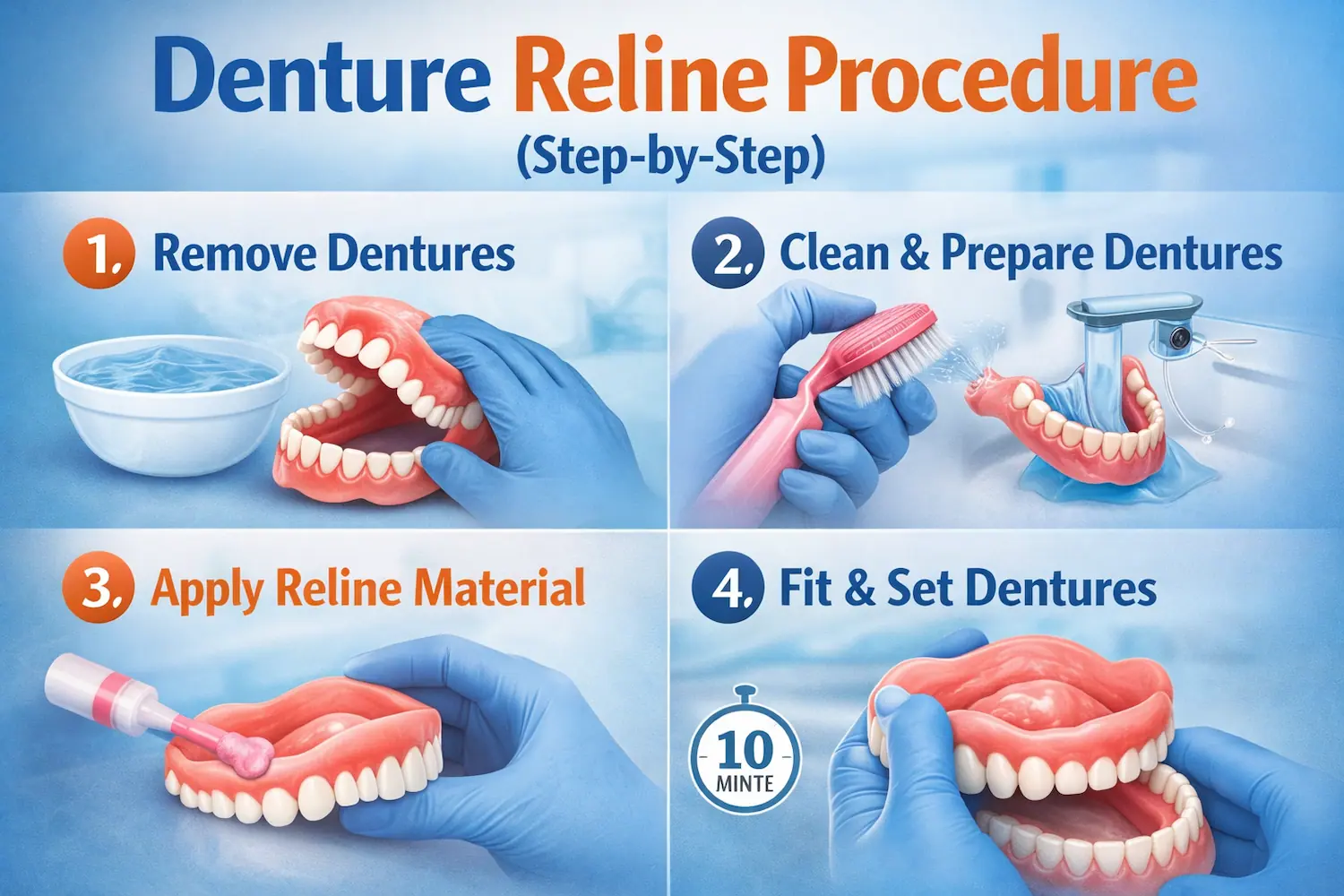
The denture reline process involves multiple stages to ensure accuracy and comfort.
Clinical Assessment
The dentist begins by examining the condition of the denture and the patient’s oral tissues. This step determines whether this procedure is appropriate or if replacement is needed.
Impression Taking
An impression of the gums is taken using dental materials. This captures the current shape of the oral tissues.
Accurate impressions are critical for achieving a precise fit during the this process.
Laboratory Adjustment
For lab-based procedures, the denture is sent to a dental laboratory where technicians reshape the internal surface using the impression.
This stage ensures high precision and durability.
Also Read: South Route : Powerful Strategic Guide to a Transformative & Essential Transport Corridor
Final Fitting
Once this procedure is complete, the dentist places the denture back into the patient’s mouth and checks for fit, comfort, and stability.
Minor adjustments may be made to ensure optimal results.
In-Office vs Laboratory Denture Reline
| Factor | In-Office Denture Reline | Laboratory Denture Reline |
|---|---|---|
| Time Required | Same day | 2–5 days |
| Precision Level | Moderate | High |
| Cost | Lower | Higher |
| Convenience | High | Moderate |
Denture Reline Cost Breakdown
The cost of this procedure varies depending on several factors, including the type of material used and the complexity of the procedure.
Average Cost Range
- Hard denture reline: Moderate cost range
- Soft denture reline: Slightly higher due to materials
- Temporary denture reline: Lower cost
According to general dental pricing standards and data referenced by the NHS, costs may vary significantly based on geographic location and healthcare coverage.
Factors Affecting Cost
Several variables influence the total cost of this:
- Type of reline selected
- Dentist’s expertise
- Laboratory fees
- Location of the dental clinic
- Additional adjustments required
Insurance and Coverage
Some dental insurance plans partially cover denture reline procedures, especially when deemed medically necessary.
Patients are advised to consult their provider to understand coverage details and eligibility.
Key Takeaways
- Necessary due to natural bone and gum changes
- Available in hard, soft, and temporary types
- Improves comfort, stability, and chewing ability
- Cost-effective compared to new dentures
Benefits of Denture Reline
This procedure plays a critical role in maintaining oral function, comfort, and long-term denture usability. It is not just a minor adjustment but a necessary procedure that directly impacts daily activities such as eating and speaking.
Improved Comfort and Fit
One of the most immediate benefits of this is enhanced comfort. As the gums change shape over time, dentures begin to create uneven pressure points. This leads to soreness and irritation.
A denture reline corrects these inconsistencies by reshaping the internal surface. This ensures even distribution of pressure across the gum tissue, significantly reducing discomfort.
Patients often report noticeable improvement within days after the procedure.
Better Stability and Retention
Loose dentures can slip during speaking or eating, causing inconvenience and embarrassment. Stability is essential for proper denture function.
A denture reline restores the tight fit between the denture and the gums. This improves suction and minimizes movement. As a result, users gain better control while chewing and speaking.
According to clinical observations referenced by the American Dental Association, proper denture fit is directly linked to improved oral performance.
Enhanced Chewing Efficiency
Poorly fitting dentures reduce bite force and chewing efficiency. Food may shift unpredictably, making it difficult to break down properly.
It restores alignment and contact, allowing more effective chewing. This contributes to better digestion and overall nutrition.
Prevention of Oral Health Issues
Ill-fitting dentures can lead to multiple oral health problems, including:
- Gum inflammation
- Ulcers and sores
- Bacterial buildup
- Fungal infections
A denture reline minimizes these risks by ensuring proper contact and reducing friction. Maintaining a well-fitted denture is essential for long-term oral health.
Cost Savings Compared to Replacement
Replacing dentures entirely can be expensive and time-consuming. This procedure offers a more affordable alternative while extending the life of the existing denture.
From a financial perspective, relining is a practical solution for patients seeking to maintain functionality without incurring high replacement costs.
Key Benefits
- Restores proper denture fit
- Improves comfort and stability
- Enhances chewing ability
- Prevents gum irritation
- Extends denture lifespan
- Reduces long-term dental costs
Denture Reline vs Denture Replacement
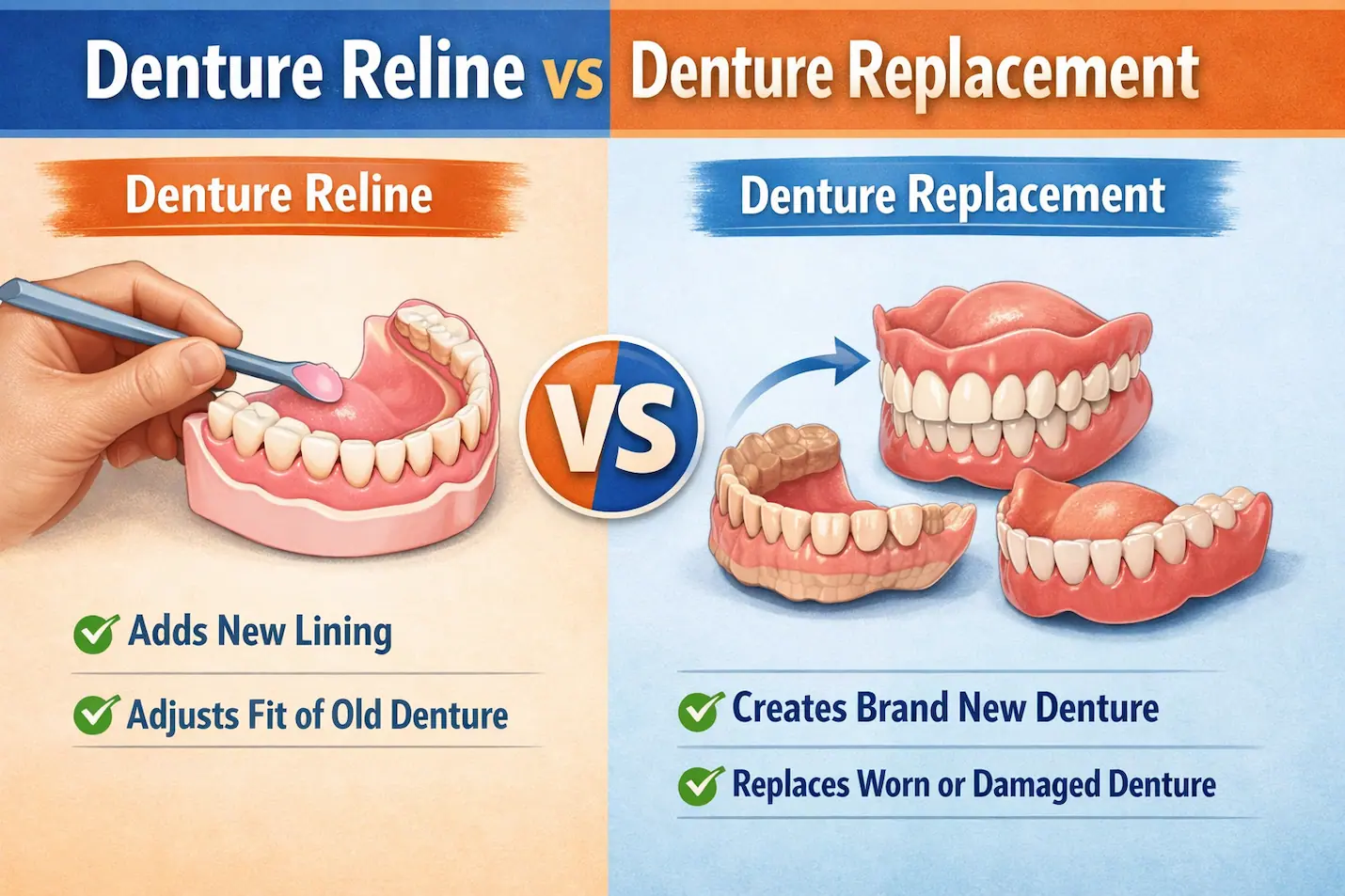
Choosing between a denture reline and full denture replacement depends on the condition of the denture and the patient’s oral health.
When to Choose a Denture Reline
- The denture structure is intact
- Only the fit has changed
- There are no cracks or damage
- Gum and bone changes are moderate
In these cases, relining restores functionality without requiring a new denture.
When Denture Replacement Is Necessary
Replacement becomes necessary when:
- The denture is damaged or broken
- Teeth on the denture are worn out
- The base no longer supports relining
- Significant structural changes have occurred
It cannot correct structural defects. In such cases, replacement is the only viable solution.
Comparison Table: Denture Reline vs Replacement
| Factor | Denture Reline | Denture Replacement |
|---|---|---|
| Cost | Lower | Higher |
| Time Required | Short | Longer |
| Purpose | Improve fit | Full restoration |
| Condition Required | Good denture base | Any condition |
| Longevity | Moderate | Long-term |
Risks and Limitations of Denture Reline
Although this procedure is effective, it has certain limitations that must be considered.
Not Suitable for Damaged Dentures
A denture reline only adjusts the internal surface. It does not repair cracks, fractures, or worn-out teeth.
If the denture structure is compromised, relining will not provide a lasting solution.
Temporary Nature of Some Relines
Soft and temporary relines are not permanent. They require periodic replacement due to material wear.
Patients must be aware that multiple relining procedures may be needed over time.
Material Wear and Degradation
The materials used in this procedure, especially soft liners, can degrade due to:
- Daily use
- Cleaning chemicals
- Temperature changes
This can affect durability and require maintenance.
Adjustment Period
After this procedure, patients may need a short adjustment period. Minor discomfort or pressure changes are common initially.
These issues typically resolve as the mouth adapts to the new fit.
How Long Does a Denture Reline Last?
The longevity of this procedure depends on the type of material used and the patient’s oral condition.
Lifespan by Type
- Hard denture reline: Can last several years with proper care
- Soft denture reline: Typically lasts a few months
- Temporary denture reline: Lasts a few weeks
According to clinical data referenced by the Cleveland Clinic, regular evaluations are necessary to determine when a reline needs replacement.
Factors Affecting Longevity
Several factors influence how long this procedure remains effective:
- Oral hygiene practices
- Frequency of denture use
- Changes in gum and bone structure
- Quality of materials used
Proper care significantly extends the lifespan of a denture reline.
Aftercare and Maintenance Tips
Maintaining a denture after relining is essential to preserve fit and function.
Daily Cleaning Guidelines
Dentures should be cleaned daily using non-abrasive solutions. Avoid harsh chemicals that may damage the reline material.
Cleaning helps prevent bacterial buildup and maintains oral hygiene.
Regular Dental Checkups
Routine dental visits are necessary to monitor changes in the gums and jawbone. Dentists can identify early signs of misfit and recommend timely adjustments.
The NHS recommends periodic dental evaluations to maintain oral health and denture performance.
Proper Storage Practices
When not in use, dentures should be stored in water or a denture solution to prevent drying and warping.
Dry dentures can lose their shape, affecting the effectiveness of the denture reline.
Avoiding Damage
Handle dentures carefully to prevent cracks or fractures. Dropping them can compromise both the denture and the reline.
Who Performs Denture Reline Procedures?
A denture reline is a specialized dental procedure performed by trained professionals.
General Dentists
Most denture relines are performed by general dentists. They assess the condition, take impressions, and either perform in-office relines or send them to a lab.
Prosthodontists
A Prosthodontist specializes in dental prosthetics, including dentures. They handle complex cases requiring advanced precision.
Patients with significant oral changes may benefit from specialist care.
Dental Laboratories
Dental labs play a crucial role in this procedure process. They use impressions to create precise adjustments using specialized materials and equipment.
Lab-based relines typically offer higher accuracy and durability.
Key Takeaway
A denture reline is a practical and clinically recommended solution for restoring denture fit, improving comfort, and maintaining oral function. It serves as a cost-effective alternative to full replacement while addressing the natural changes that occur in the mouth over time.
Advanced Clinical Insights on Denture Reline
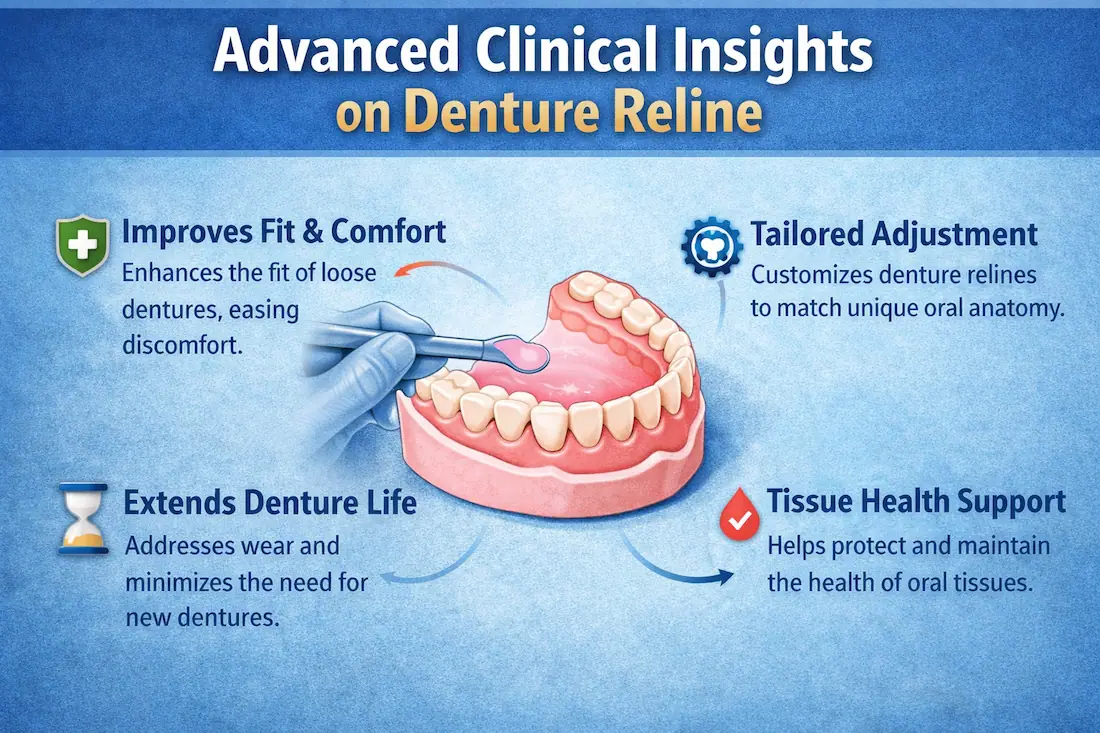
A denture reline is not only a mechanical adjustment but also a procedure deeply connected to oral biology and long-term prosthetic success. Understanding the clinical principles behind this procedure helps explain why it is routinely recommended in dental practice.
Bone Resorption and Long-Term Denture Fit
After tooth loss, the jawbone undergoes continuous resorption due to lack of stimulation. This biological process reduces bone volume and alters the shape of the oral ridge.
A denture reline compensates for these changes by adapting the denture base to the new contours of the gums. However, bone resorption is ongoing, meaning that relining may be required multiple times over the years.
According to observations referenced by the Mayo Clinic, bone loss can significantly affect denture stability if not managed properly.
Role of Acrylic Resins and Soft Liners
Materials used in a denture reline directly impact durability and comfort.
- Acrylic resins are used in hard relines due to their strength and longevity
- Silicone-based liners are used in soft relines for flexibility and cushioning
Each material serves a specific purpose depending on patient needs. Hard materials provide structural stability, while soft materials prioritize comfort.
Also Read: OpenSkyNews : Powerful Insights into Features, Trust, and Journalism Role
Importance of Precision in Impression Techniques
The success of this procedure depends heavily on the accuracy of the impression taken during the procedure.
Even minor inaccuracies can lead to pressure points or instability. This is why laboratory-based denture reline procedures are often preferred for long-term results.
Precision ensures that the denture distributes pressure evenly across the gums, preventing localized irritation.
Denture Reline vs Rebase: Understanding the Difference
A denture reline is often confused with a denture rebase, but they are distinct procedures.
What Is a Denture Reline?
This procedure adjusts only the internal surface of the denture while keeping the existing base intact.
What Is a Denture Rebase?
A denture rebase replaces the entire base of the denture while keeping the artificial teeth unchanged. This is a more extensive procedure compared to a denture reline.
Comparison Table: Denture Reline vs Rebase
| Factor | Denture Reline | Denture Rebase |
|---|---|---|
| Scope | Internal surface only | Entire denture base |
| Cost | Lower | Higher |
| Time | Shorter | Longer |
| Purpose | Improve fit | Restore structure |
| Complexity | Moderate | High |
Can You Reline Dentures at Home?
Home denture reline kits are available in the market, but they come with limitations and risks.
Risks of DIY Denture Reline
- Improper fit leading to gum damage
- Use of low-quality materials
- Increased risk of infection
- Lack of professional assessment
This procedure requires clinical precision that cannot be replicated with over-the-counter kits.
Professional Recommendation
Dental professionals strongly advise against performing a denture reline at home. According to guidelines associated with the American Dental Association, denture adjustments should always be performed under professional supervision.
When Should You Schedule a Denture Reline?
Timing plays a crucial role in maintaining denture performance.
Recommended Frequency
- Every 1–2 years for routine maintenance
- Immediately if discomfort or looseness occurs
- After major dental procedures
Early Warning Signs
- Denture slipping frequently
- Pain while chewing
- Visible gaps between denture and gums
- Increased use of adhesives
Pros and Cons of Denture Reline
Advantages
- Cost-effective solution
- Quick procedure
- Improves comfort and stability
- Extends denture lifespan
Limitations
- Not suitable for damaged dentures
- May require repeated procedures
- Temporary solutions have shorter lifespan
Key Takeaway
A denture reline is a clinically proven method to maintain denture fit and function. It addresses natural oral changes without the need for full replacement, making it a practical solution for long-term denture users.
Conclusion
A denture reline is an essential procedure for maintaining the fit, comfort, and functionality of dentures over time. As natural changes occur in the gums and jawbone, relining ensures that dentures continue to perform effectively without requiring full replacement.
By addressing looseness, improving stability, and preventing oral health issues, this procedure offers a practical and cost-efficient solution. Regular dental evaluations and proper maintenance further enhance its effectiveness, making it a standard part of long-term denture care.
Frequently Asked Questions (FAQs)
What is a denture reline?
A denture reline is a dental procedure that reshapes the inner surface of a denture to improve its fit against the gums. It restores stability and comfort without replacing the entire denture.
How much does a denture reline cost?
The cost of this procedure varies depending on the type and location but is generally lower than full denture replacement. Hard relines are moderately priced, while soft relines may cost slightly more due to material differences.
How long does a this procedure last?
- Hard denture reline: several years
- Soft denture reline: several months
- Temporary denture reline: a few weeks
Longevity depends on oral conditions and maintenance.
Is a soft denture reline better than a hard denture reline?
A soft denture reline offers more comfort, especially for sensitive gums, while a hard denture reline provides durability and long-term stability. The choice depends on individual needs.
Can dentures be relined multiple times?
Yes, a denture reline can be performed multiple times as the shape of the gums continues to change. However, repeated relines may eventually require denture replacement.
Is denture reline better than replacement?
A denture reline is better when the denture structure is still in good condition. Replacement is necessary when the denture is damaged or no longer functional.
How long does a denture reline procedure take?
An in-office denture reline can be completed in a single visit, while laboratory procedures may take a few days depending on complexity.